
Overtourism
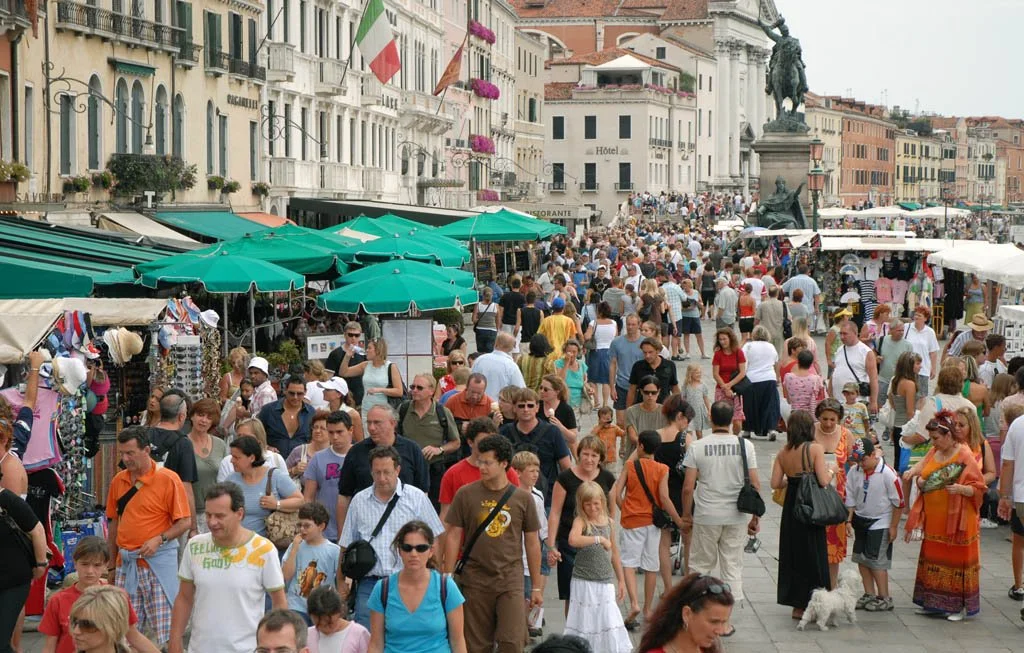
Tourist congestion on Venice’s Riva degli Schiavoni. Image credit: Jean-Pierre Dalbéra, Wikimedia Commons.
Overtourism: when the number of people visiting a destination becomes so great that it has a negative impact on the infrastructure, culture, and daily lives of the local people.
In the Roman neighborhood I left 20 years ago when I moved away, interspersed among the mom-and-pop-run trattorie and occasional upscale restaurants, there were small stores selling household products, hardware, stationery, fruit and vegetables, kitchen appliances large and small, pretty lamps, elegant home décor, shoes, and fashion. And there were cobblers, tailors, and other artisans like furniture restorers, jewelry makers, and metal smiths.
Since moving back in early September I’ve noticed most of those shops are gone.
In their places are anonymous “authentic” eateries, bars, pizza-by-the-slice joints, and gelaterie.
Why?
Well, there’s a lot more money in slinging spritzes to foreigners than brooms to locals.
And, considering the average Italian monthly salary is €1,600 after taxes (or $1,679),* renting out the family’s extra apartment for short stays to tourists certainly makes financial sense.** It’ll earn you a lot more than renting long-term to your fellow Romans. Problem is, this drives housing market prices up and makes the neighborhood unaffordable to most locals. So businesses increasingly cater to the foreigners staying in or visiting the neighborhood. A vicious cycle if ever there was one.
So what’s to be done?
The good news is, there ARE things we can do.
Here are six ways to avoid being part of the problem of overtourism:
Travel during slower seasons
Avoid traveling with large groups
Stay at locally-run hotels and eat in locally-owned restaurants
Buy birthday, holiday, and other gifts from local businesses
Stay in places longer than average visitors
Get to know and interact with local people
And, guess what? This is exactly what we do at Wonderfeast. Because I started Wonderfeast out of a desire to share with others the unique and extraordinary art, beauty, history, and culture of the places I love most.
At Wonderfeast, we travel during less heavily touristed seasons, we stay at locally-owned hotels and eat at locally-owned restaurants, we dive deep into our destinations, staying for a week or more, we get to know local business owners, artisans, and shopkeepers, and we have a cooking class and often visit a private home to better understand the culture we’re experiencing.
Connecting with a culture - through its cuisine, art, history, and especially its people - takes time. It’s the opposite of checking sites off a bucket-list among hordes of others…
…and it’s so much more rewarding.
*2022 numbers, according to ISTAT (Istituto nazionale di statistica; National Institute for Statistics)
**Historically, Italian families invest their money nel mattone (in brick, aka real estate) more readily than financial products.