
Il Cinema in piazza
It’s 2012 in Rome, Italy. A real estate developer wants to tear down the abandoned historic 1950s Cinema America to turn it into apartments. A scrappy, devoted band of young Roman cultural activists and cinephiles, angered by the prospect of the iconic theater being demolished, occupy the space and screen films.
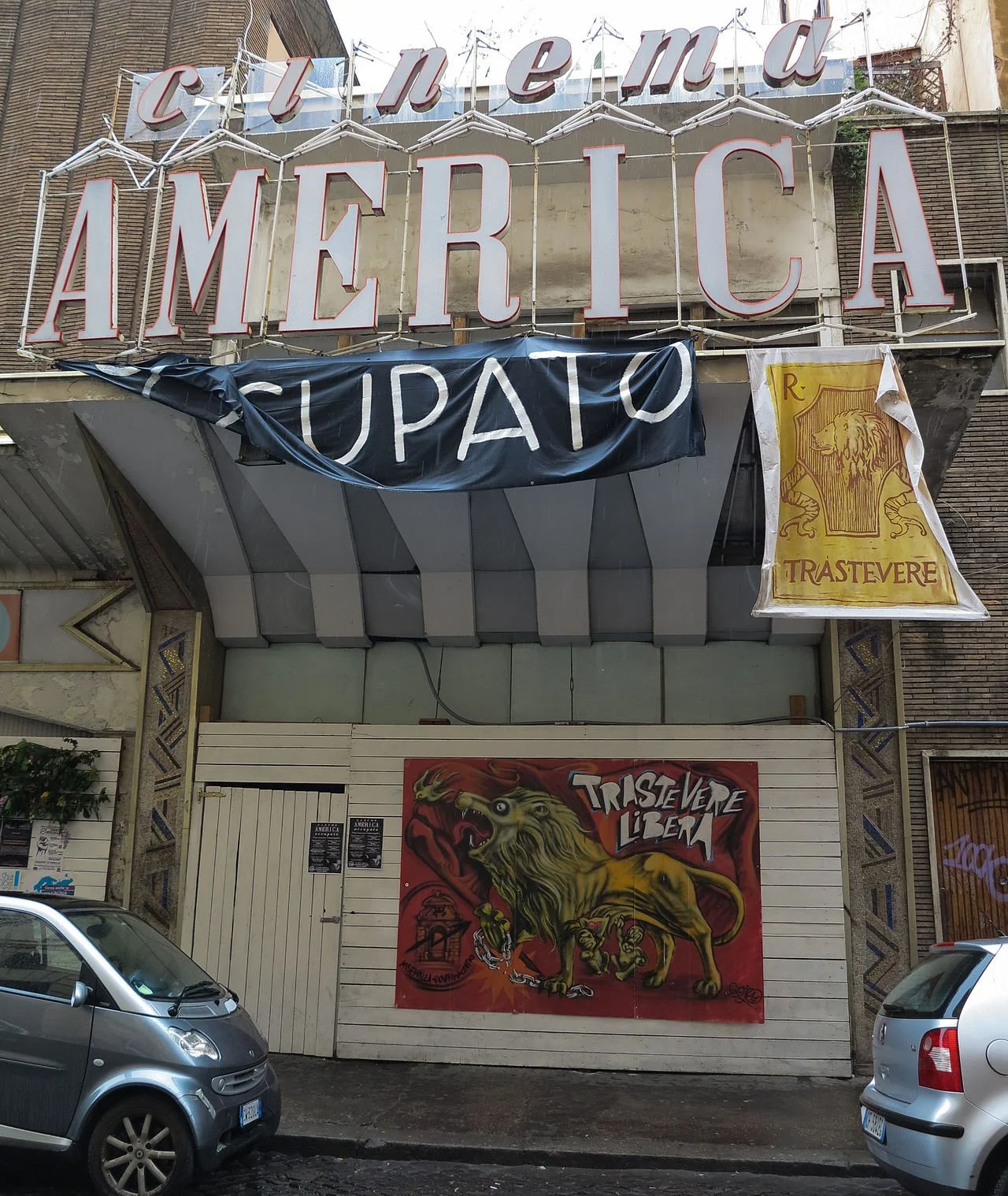
The shuttered Cinema America in Rome’s Trastevere neighborhood. Photo credit: Joadi, Wikimedia Commons.
Flash forward to 2014: the “ragazzi der Cinema America” (the “Cinema America kids” in Roman dialect), evicted from the movie theater, apply to the municipal government for permission to screen a movie al fresco in the summertime in nearby piazza San Cosimato. Permission granted, they show Francesco Rosi’s 1970 war drama, Uomini Contro (Many Wars Ago).
Fellow citizens attend the free event and are delighted. Then-president of the Italian Republic, Giorgio Napolitano, applauds them for their initiative.
Emboldened, the ragazzi do it again in 2015. Only this time they screen multiple films, dedicated to the giants of Italian cinema. 30,000 people attend, including directors Ettore Scola and Giuseppe Tornatore.
Since then, Il Cinema in Piazza has grown to become one of Rome’s favorite summertime events, with two additional outdoor screens added in recent years. Guests have included Roberto Benigni, Bernardo Bertolucci, Gia Coppola, Wim Wenders, Kiyoshi Kurosawa, Oliver Stone, Jeremy Irons, Debra Winger, Mark Ruffalo and many more. Over 120,000 people are estimated to have attended this year’s 94 screenings. And it’s always free.
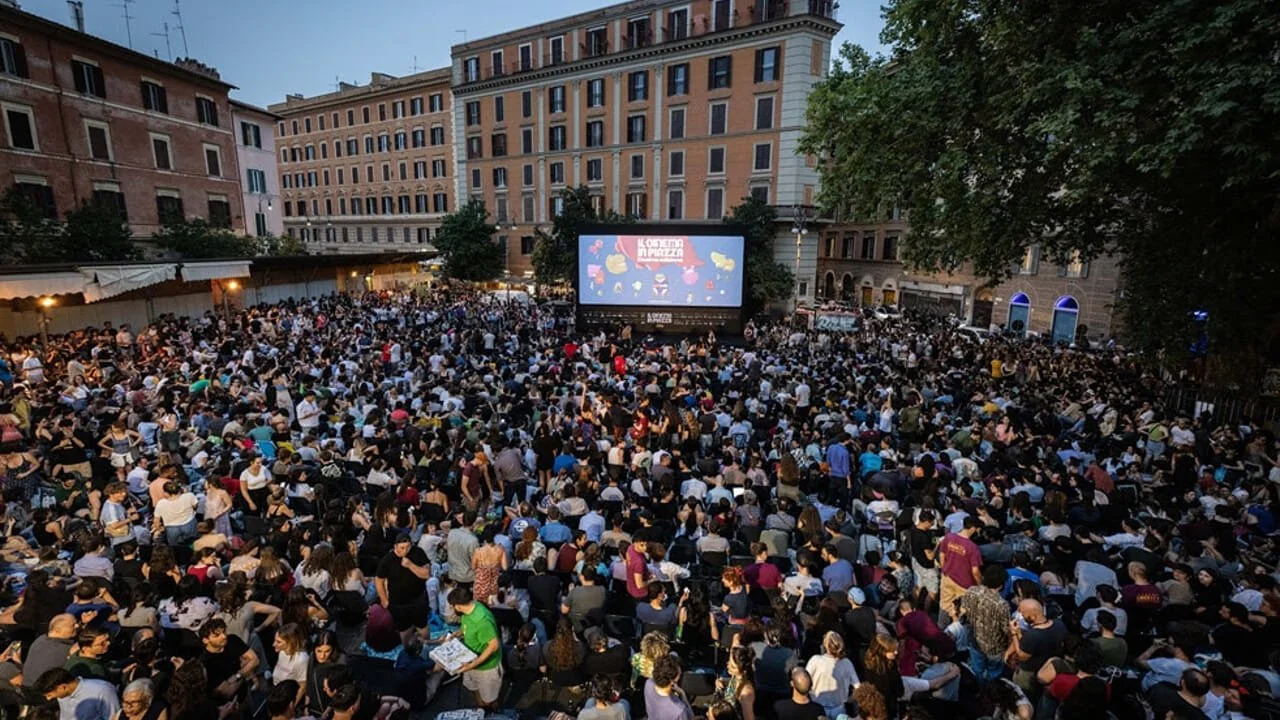
Piazza San Cosimato on a Cinema in piazza night. Photo credit: RomaToday (www.romatoday.it/eventi/cultura/il-cinema-in-piazza-1-giugno-13-luglio-2025.html)
This past summer, on a steamy evening in late June, I met my friend Jeffrey in the piazza to watch Ingrid Bergman in Roberto Rossellini’s dramatic 1950 picture, Stromboli. We were prepared: he got there early to snag front-row seats and I brought pillows for the rather uncomfortable plastic chairs, as well as earplugs, knowing the volume would be LOUD.
The black-and-white film played against a summer sky that turned electric blue to sapphire to ink. The soundtrack of Bergman’s Swedish-inflected Italian and the film score echoed throughout the piazza. It blended occasionally with the cacophony of endemic piazza sounds: kids running around restaurant tables where their families were eating dinner or a bossy neighborhood dog peremptorily barking its disapproval at the large audience occupying “her” piazza. Overhead, seagulls cried out to each other, sharing the location of scraps left behind by the piazza’s fishmongers. Unknowingly, they were in dialogue with the celluloid gulls circling the erupting volcano on the screen.
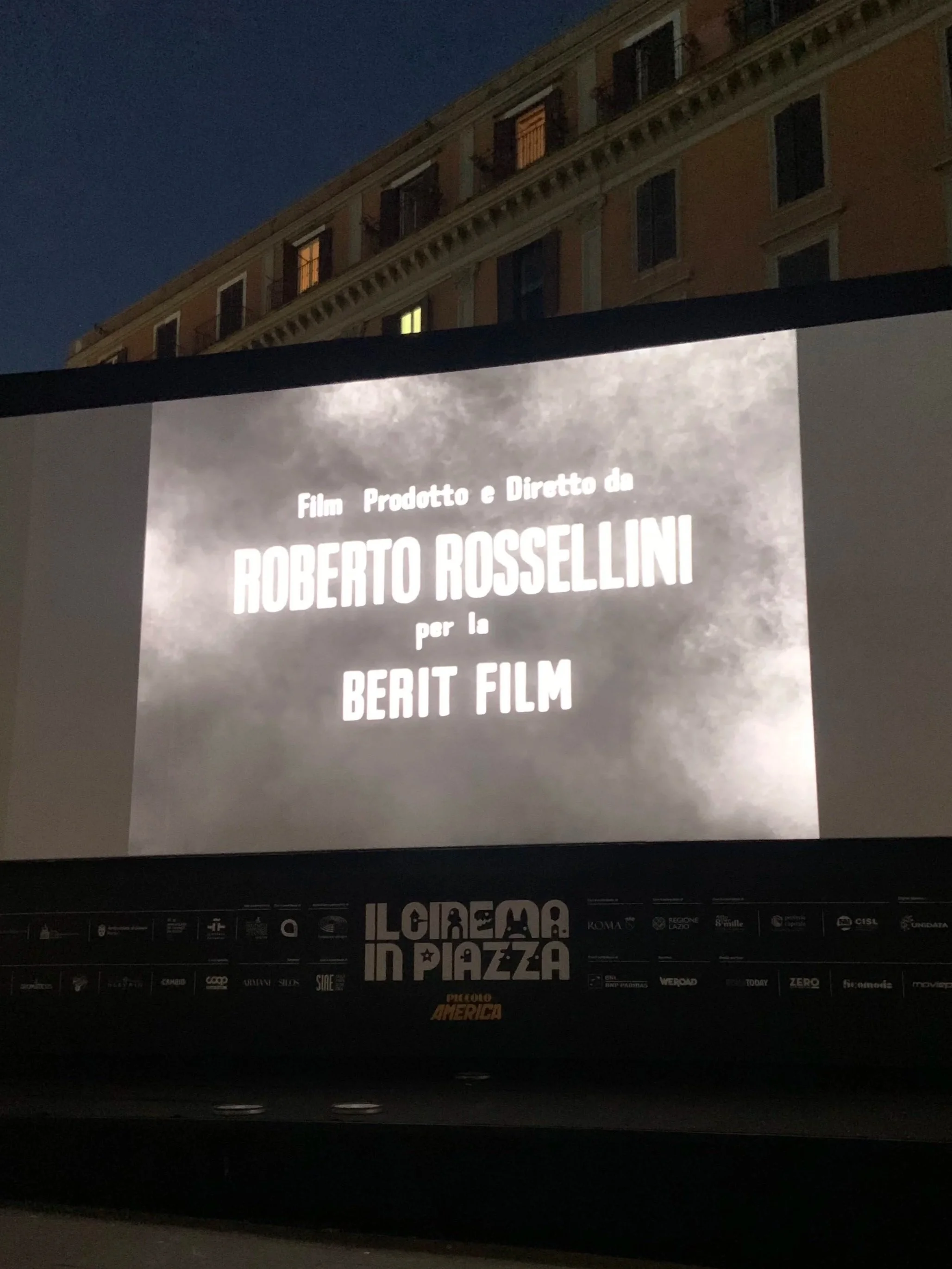
Opening credits for Stromboli, Roberto Rossellini, 1950. Photo credit: author.
And suddenly, after Bergman climbed Stromboli, dramatically invoking God’s mercy and burying her distraught but gorgeous face in the volcano’s ash, it was over. The spell was broken.
The heretofore mute audience burst into prosaic chatter as people peeled off for home or to have a gelato or a drink. Everyone noisily dragged their chairs to pile them into precarious, Pisa-like towers that the staff chains together until the next screening. And the dogs, soccer-playing teenagers, and amorous couples had the piazza back to themselves.
A magical Roman summer night…. Grazie, ragazzi.
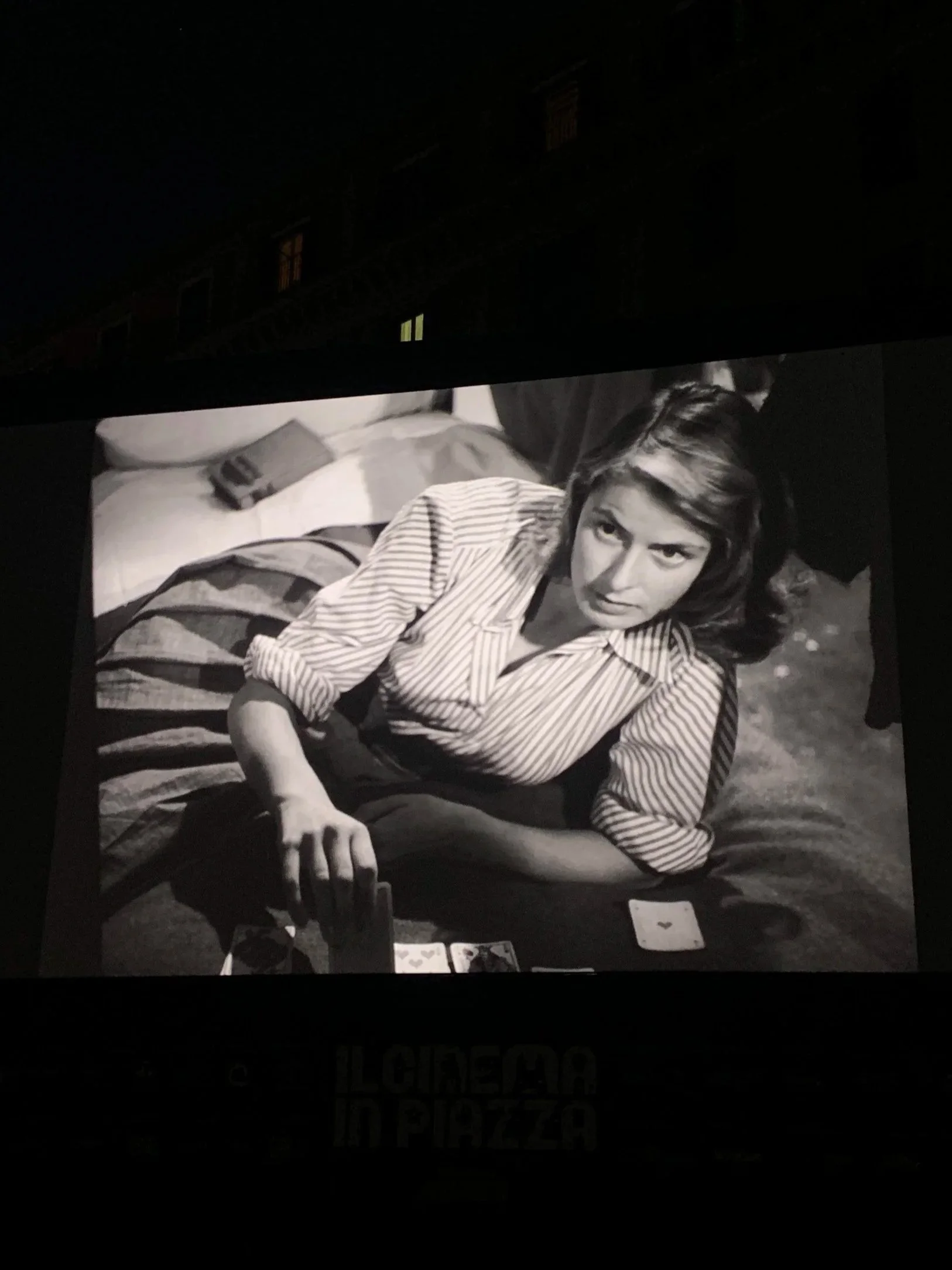
Close up of a radiant Ingrid Bergman in Stromboli. Photo credit: author.