
Palm Sunday at St. Peter’s
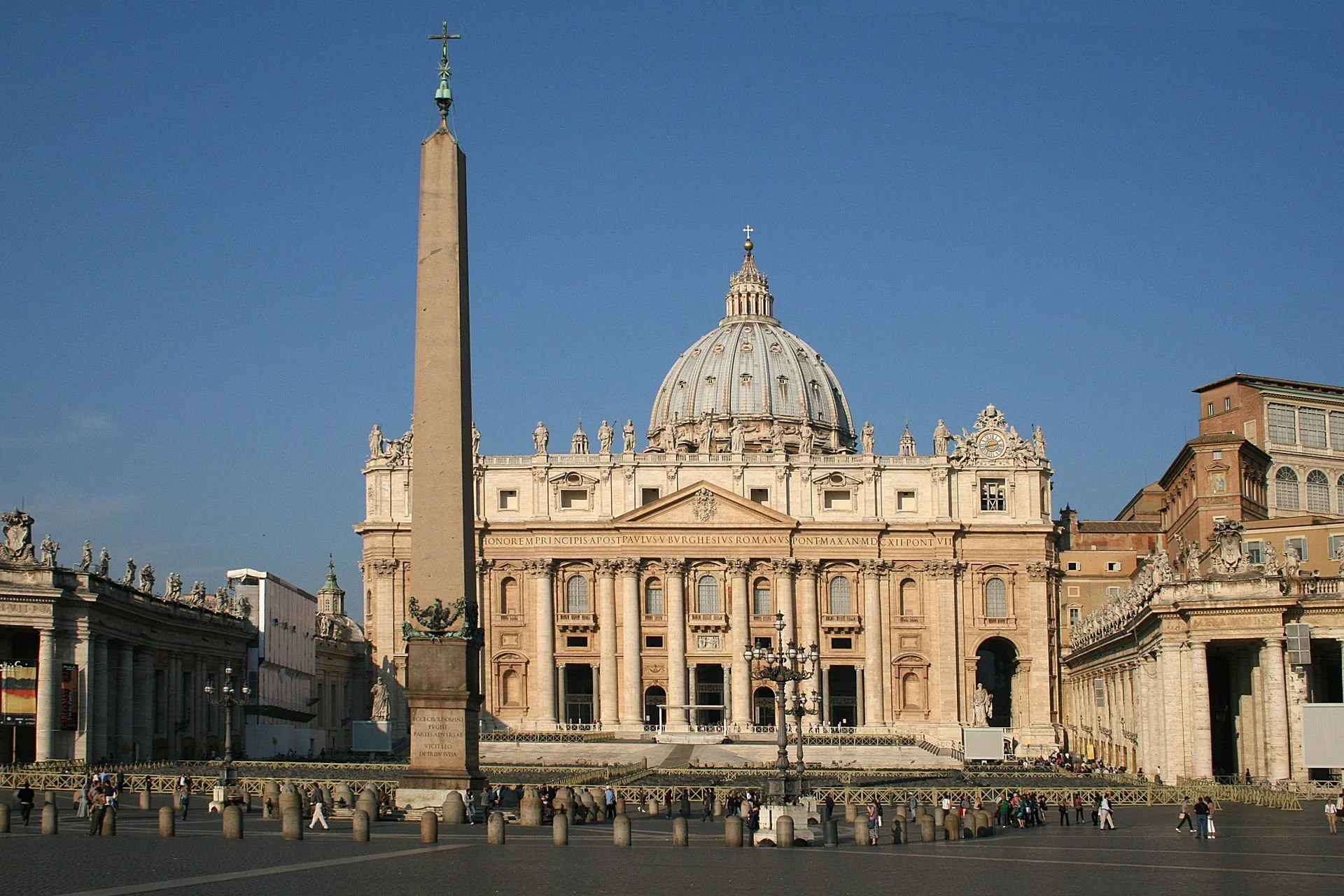
Piazza San Pietro. Photo credit: Jean-Pol Grandmont, Wikimedia Commons.
An intimidatingly tall Egyptian obelisk towers over the center of St. Peter’s Square. One of thirteen such sculptures brought to Rome during the Imperial age, it had stood on the site of the Circus of Nero - infamous among Christians as the place of St. Peter’s martyrdom - until the late 16th century, when it was erected on its present location.
Pope Sixtus V had the idea of using the many neglected ancient stone monuments as markers for pilgrims traversing the city from one place of worship to another. Seeing no other need for them (modern archeology and concepts like conservation were still a long way away), he effectively turned the granite needles into sky-scraping sign posts dotting the urban landscape. The first to be raised would fittingly be the one designated to stand before St. Peter’s Basilica.
On September 10, 1586, on the pope’s orders, architect Domenico Fontana directed more than 800 men, 160 horses, and 45 gargantuan winches to raise the enormous monolith. Underlining the complexity of the enterprise, the pope issued an edict that no one in the area should utter a word during the operation under penalty of death.
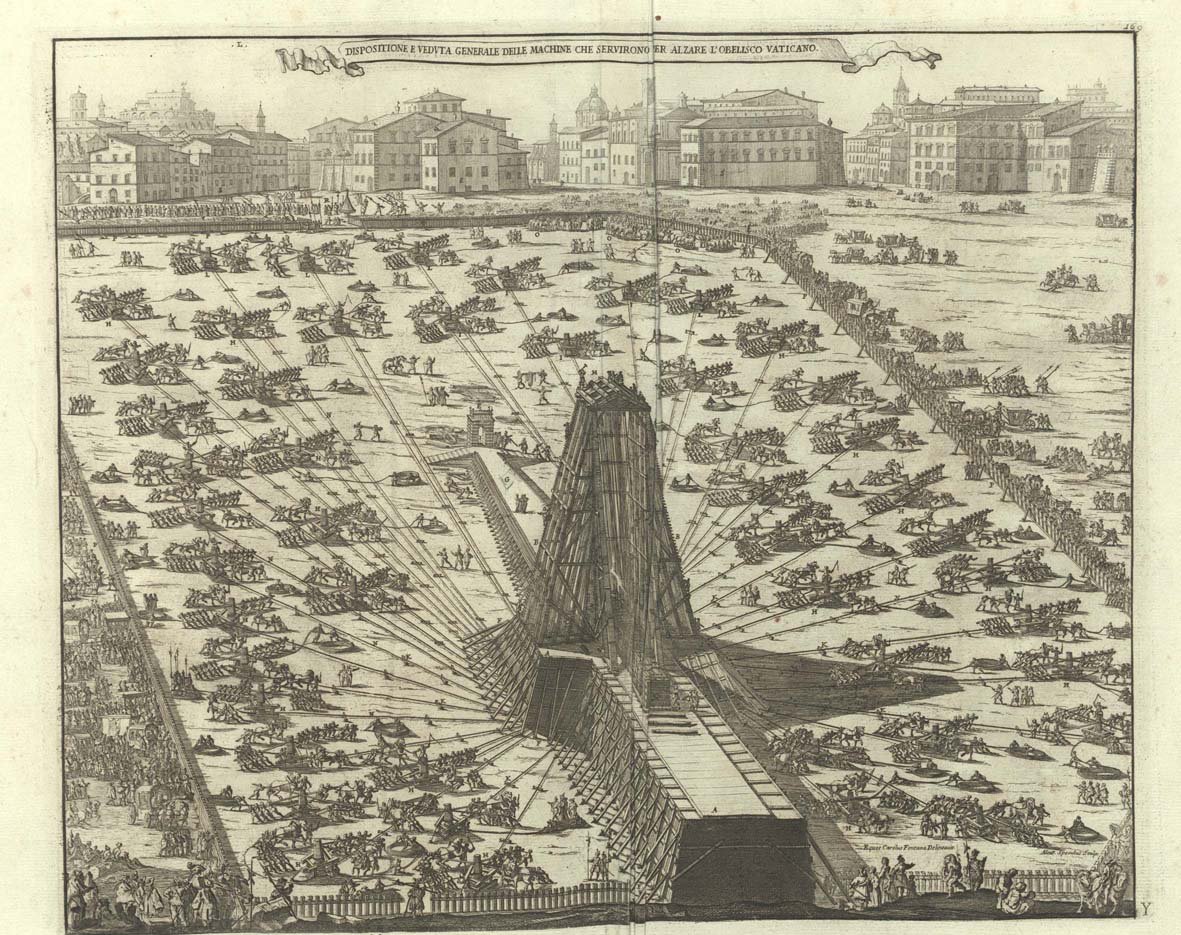
Carlo Fontana, Veduta del castello ligneo e degli argani impiegati per elevare l’obelisco vaticano (View of the wooden tower and winches used to erect the Vatican obelisk), from Il Tempio Vaticano e sua origin (The Vatican Temple and Its Origins), 1694. Photo credit: Creative Commons.
Men, horses, and winches began to heave and the 360-ton needle to rise but before long the obelisk’s weight caused the ropes started to fray and smoke dangerously. The collapse of the monument was imminent and all held their breaths in fear of the devastation to follow were it to smash to the ground crushing the crowds below.
Suddenly, an urgent shout broke the silence: “Daghe l’aiga ae cordeI!” (Ligurian dialect for “Water on the ropes!”). The command was given by one Benedetto Bresca, a captain of the Genovese navy, who knew that throwing water on the hemp ropes would cause them to cool and contract. His orders were hastily carried out as bucket upon bucket was emptied on the ropes. The obelisk rose without further incident. All heaved sighs of relief and onlookers roared in jubilation.
Later, Bresca, was brought before the pope. Far from condemning him to death for calling out, the pope asked how he could reward Bresca for his courageous act. The captain asked that from thence forth the palms used at St. Peter’s Basilica on Palm Sunday would come from the Ligurian Riviera.
And so it is that, to this day, per Bresca’s request, the fronds carried in St. Peter’s Square during the Palm Sunday procession come from palms around his home town of Bordighera.
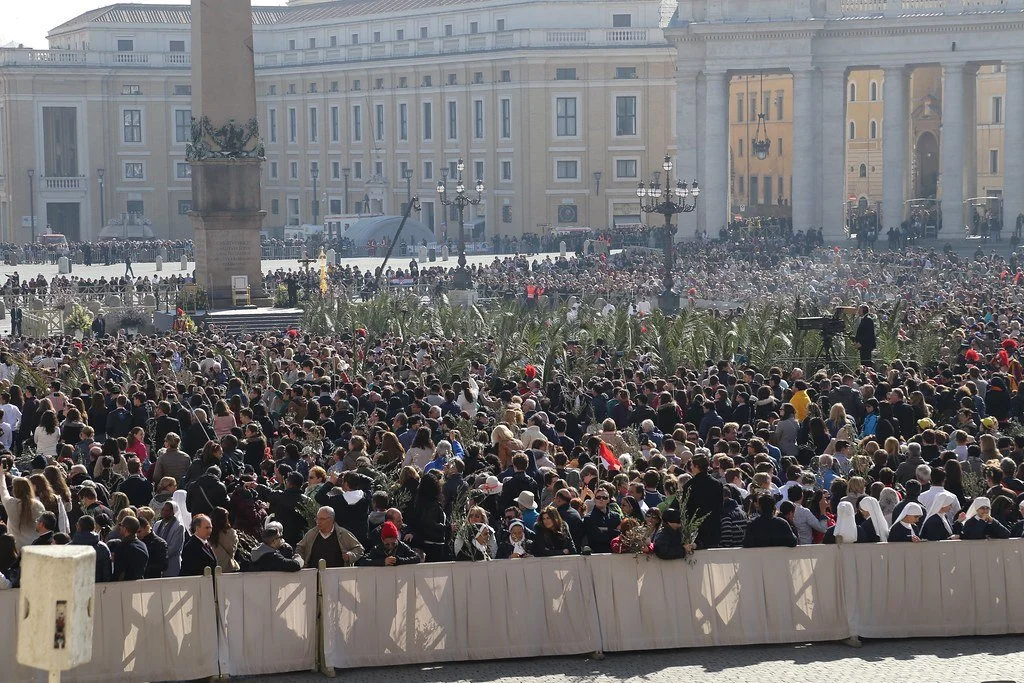
Palms being processed past the crowd at the base of the obelisk on Palm Sunday, 2016. Photo credit: Gabriel del Fiaco
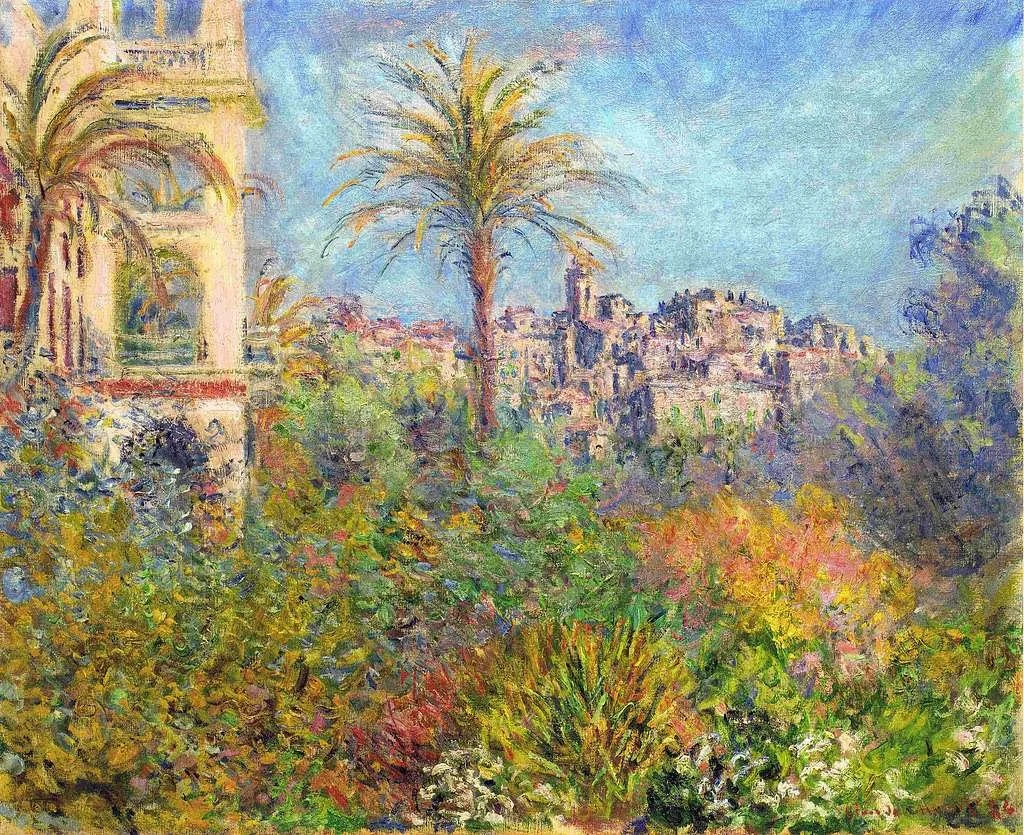
Claude Monet, Villas at Bordighera, 1884.